
Piriformis Syndrome: Why It Happens & How Apex’s Three-Prong Approach Brings Relief
Dr. Meghan Faulkner MS, DC, DACBSP
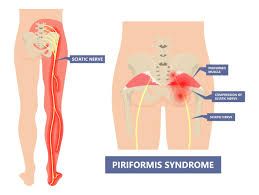
If you’ve ever felt a deep ache in your glute, sharp pain down the back of your leg, or tightness that makes sitting uncomfortable, you might be dealing with piriformis syndrome. It’s a condition where the piriformis muscle irritates or compresses the sciatic nerve, creating symptoms that often feel just like sciatica. Cleveland Clinic+1
At Apex Sports Medicine in Leander, we take a movement-based approach to identifying why the piriformis becomes irritated — and how to calm it down so you can move freely again. Our three-prong approach addresses not just symptoms, but the underlying mechanics that usually drive the problem.
What Is Piriformis Syndrome?
The piriformis is a small, deep hip muscle that helps stabilize the pelvis and rotate the hip. When it becomes tight or overworked, it can irritate the sciatic nerve and cause:
Deep glute pain
Pain that radiates down the leg
Tingling or numbness
Pain with sitting, driving, stairs, or running Cleveland Clinic+1
One important reason it can be confusing: piriformis syndrome can mimic lumbar radiculopathy (“true sciatica” from the low back), which is why proper assessment matters. Faculty.KSU+1
Why the Piriformis Gets Irritated
Piriformis syndrome rarely happens “randomly.” It’s often a load + movement pattern problem, commonly influenced by:
Prolonged sitting
Long hours sitting keep the piriformis compressed and shortened, and can aggravate symptoms. Cleveland Clinic+1
Overuse or repetitive stress
Running, cutting sports, and high-volume training can overload the deep hip rotators over time. Cleveland Clinic+1
Hip/pelvic mechanics and muscle imbalance
If glutes underperform or hip mobility is limited, the piriformis often compensates and becomes overactive.
Anatomy differences (yes, it matters)
Most commonly, the sciatic nerve runs under the piriformis — but variations exist, including pathways that run throughparts of the piriformis in a smaller percentage of people, which may increase susceptibility for nerve irritation. ScienceDirect+1
At Apex, we don’t just chase pain — we identify the movement or stability breakdown that’s forcing the piriformis to do more than its fair share.
Apex’s Three-Prong Approach to Piriformis Syndrome
Piriformis syndrome responds best when you address joint motion + soft tissue tension + movement control together. That’s exactly what our integrated approach is built to do.
1) Chiropractic Adjustments: Improve Pelvic & Lumbar Mechanics
When the pelvis and low back aren’t moving well, the hip rotators (including the piriformis) often tighten to create stability. Chiropractic adjustments are used to:
Improve pelvic and lumbar joint motion
Reduce mechanical stress and compensation patterns
Help normalize how the hip loads during walking, running, and lifting
This matters because piriformis syndrome is frequently overlooked and misidentified — and improving mechanics is a major part of reducing the cycle of irritation. Faculty.KSU+1
2) Soft Tissue Therapy + Dry Needling: Release Deep Trigger Points
Piriformis pain is often driven by deep trigger points and protective muscle guarding. Soft tissue work helps reduce the tension that can contribute to sciatic nerve irritation and restores hip mobility.
Dry needling can be especially helpful because it can target deeper gluteal trigger points that are difficult to reach with hands alone. Evidence supports dry needling as a beneficial adjunct for pain and function when combined with exercise-based care in related neuromuscular hip/low-back patterns. OUP Academic+1
(And practically speaking: when the glutes and deep hip rotators calm down, nerve-like symptoms often calm down too.)
3) Rehab & Corrective Exercises: The Long-Term Fix
This is the part that makes results stick.
In many cases, piriformis syndrome improves and stays better when rehab restores:
Glute strength (especially lateral hip stability)
Hip mobility and control
Better mechanics for squatting, hinging, stairs, and running
Reduced over-reliance on the piriformis
Clinical literature and reviews consistently emphasize that piriformis syndrome management typically includes targeted exercise and movement correction as a cornerstone of conservative care. Cleveland Clinic+2Springer+2
Why This Integrated Approach Works
Piriformis syndrome is rarely “just a tight muscle.”
Our three-prong system works because:
Adjustments improve joint motion → reducing disc stress
Soft tissue therapy reduces muscle tension → relieving nerve pressure
Rehab exercises restore healthy movement → preventing re-injury
That’s the difference between short-term relief and long-term resolution.
When to Get Evaluated
You may want an assessment if you have:
One-sided glute pain that worsens with sitting
“Sciatica” symptoms without clear low-back triggers
Pain getting out of the car or after long drives
Tightness that stretching doesn’t change
Pain with stairs, running, or single-leg work Cleveland Clinic+2MedlinePlus+2
Apex’s movement-based exam helps differentiate piriformis syndrome from disc irritation, SI joint issues, or lumbar radiculopathy—so you get the right plan from day one. Faculty.KSU+1
Get Lasting Relief with Apex Sports Medicine
Piriformis syndrome can be stubborn, but it’s highly treatable with the right approach. At Apex Sports Medicine in Leander, we help you move better, feel better, and address the underlying mechanics that caused the problem in the first place.
👉 Book your appointment today and let’s get your hips moving the way they should.
Ready to Recover Without Surgery?
Disc pain can feel overwhelming, but you are not stuck with it.
At Apex Sports Medicine in Leander, we help patients get out of pain, restore movement, and return to an active lifestyle using a safe, proven, multi-layered approach.
👉 Book your appointment today and begin your path to recovery.